
Union Minister Bandi Sanjay Kumar announced India's ambitious plan to rank among the top 10 sporting nations by 2036 and top five by 2047. He highlighted the central government's commitment to sports development through initiatives like Khelo India, increased budget allocation, and a special fund for sports equipment and technology, emphasising sports as a tool for nation-building and youth empowerment.
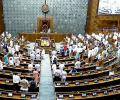
India's Monsoon session of Parliament remains formally unprorogued 40 days after adjournment, setting a new record. This unusual delay fuels speculation that the government intends to introduce a key legislation, possibly an amendment to the women's reservation law, without convening a new session. The proposed amendment aims for a 50 per cent seat expansion to address concerns over delimitation.

The Indian government's announcement of 10,000 additional seats in medical colleges next year, part of a plan to add 75,000 seats over five years, has been welcomed by education experts and stakeholders. The move aims to address the shortage of medical professionals and reduce the outflow of Indian medical students to other countries. The budget also includes infrastructure expansion at five new IITs to accommodate 6,500 more students and an allocation of Rs 500 crore to set up a Centre of Excellence in Artificial Intelligence for education.

The Lokpal, India's anti-corruption ombudsman, has been allocated Rs 30 crore in the Union Budget 2026-27. The Central Vigilance Commission (CVC) has been allocated Rs 54.56 crore.
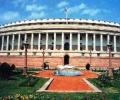
The sources also said that the Budget session of Parliament is likely to start from March 12.

The Union finance ministry has kicked off the exercise for preparation of the Union Budget for the fiscal year 2012-13 and has asked all ministries to rush proposals by October 31 for inclusion in the second supplementary budget for 2011-12 to be presented in the winter session of Parliament.

Moody's Ratings has sharply increased India's GDP growth forecast for fiscal 2026-27 to 7 per cent, making it the fastest among G20 economies, driven by economic resilience despite the Middle East conflict. However, the agency flagged significant inflation risks stemming from elevated oil prices and potential El Nino disruptions.
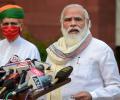
The ministry of finance will kickstart its massive budgetary exercise from October 15.

New Delhi was told it had given something up; in reality it had stopped talking about it, notes Dr Abhishek Puri.

The Congress party has strongly criticized the Union Budget, calling it 'lacklustre' and 'disappointing,' claiming it fails to address the needs of farmers, unemployed youth, and other key sectors.

The first leg of the Budget session concluded with debates over the India-US trade deal and a former army chief's memoir, and will reassemble on March 9.

Both Houses of Parliament were adjourned sine die, concluding a Budget session marked by the passage of key legislations and the defeat of a Constitution amendment bill on women's reservation. The session saw frequent opposition protests and discussions on various issues, including the West Asia conflict.

The Budget emphasises on capacity building and empowerment of marginalised sections of society including farmers.

Finance Minister Nirmala Sitharaman will present the Union Budget on Tuesday as the Monsoon Session of Parliament gets underway next week with the united opposition set to corner the National Democratic Alliance government on issues ranging from the NEET paper leak case and railway safety.

With the Union Budget 2026, India's 74th, fast approaching, all eyes are once again on New Delhi's North Block as Finance Minister Nirmala Sitharaman is preparing to table it on February 1, 2026, marking her ninth Budget presentation in a row.

'Wages have not risen. Rural wages have stagnated. The growth was 0.7 per cent last year. For casual and irregular labour, the wage growth is negative.'
As finance minister Pranab Mukherjee gets ready to present the much anticipated budget for financial year (FY) 2010-11 on February 26, we tell you what you ought to know about the Union budget.

Officials said the government is keen to conform to the convention of the Union Budget for 2026-2027 being presented on February 1 despite it falling on a Sunday in 2026.

Finance Minister Nirmala Sitharaman presented her ninth consecutive Union Budget, focusing on investments and growth. The speech was marked by its business-like approach and lack of cultural references, while opposition members raised concerns about regional representation.

Sitharaman continues with the tradition she set in 2019, carrying the budget speech in a 'bahi-khata', which she used after dropping the briefcase tradition.

The government on Sunday gave a strong push to upgradation and expansion of healthcare infrastructure, medical education and pharma sector with the Union Budget 2026-27 announcing a slew of steps, including those aimed at making India a global hub for allied healthcare professionals and biopharma manufacturing.

Around 24 paise will come from borrowings and other liabilities, 10 paise from non-tax revenue like disinvestment, and 2 paise from non-debt capital receipts, the Budget documents showed.

This year's Economic Survey and the Union Budget were more closely followed for more reasons than one.
What is the Budget? Why is it so important? Why does it affect all of us? And, above all, how does one interpret the budgetary lingo flying around?

What items did Indian Finance Minister Nirmala Sitharaman make cheaper?

The Sports Ministry has got a fillip with the government allocating Rs 3,397.32 crore, an increase of Rs 723.97 crore, in the Union Budget on Wednesday.
Captains of the Indian industry on Monday welcomed the Union Budget 2005-06 describing it as growth-oriented.

Sitharaman took charge of the Finance Ministry on May 31, 2019, and has steered the economy through the COVID-19 pandemic and geopolitical turmoil, making India the fastest-growing major economy in the world.

Ten days after both Houses of Parliament were adjourned sine die, the Monsoon session is yet to end formally, giving rise to speculation that the government wants to pass a key legislation without convening a new session.

'If you go by the capital expenditure, this is a good defence budget. But we will have to see if the government can keep defence spending at 2 per cent or higher in 2027-2028.'

The conflict may disrupt Budget 2026-2027 projections, squeezing revenues and raising subsidies, prompting fiscal adjustments and potential reforms, echoing lessons from the Covid-era shock, points out A K Bhattacharya.

Former Prime Minister Indira Gandhi was the first and only women till now to have presented the Union Budget.

No income tax relief, but compliance burden eased for youth and middle class through lower TCS.

The need for a manufacturing policy, reining in food inflation and raising investment in the country were among key suggestions given by economists who met Finance Minister Nirmala Sitharaman and senior ministry officials in the first round of pre-Budget consultations on Friday.
Finance Minister Pranab Mukherjee presented the Union Budget for 2012-13 on Friday.

Of the Rs 31,820.80 crore allocated to central sector schemes and projects, only Rs 11,868.05 crore was utilised, according to the revised estimates.

'It is not because of the war in West Asia, which began on February 28.' 'Petroleum product prices are already going through the roof. They are bound to have a serious inflationary impact.' 'A country's leadership is tested in trying times. It is here that the current leadership is failing.'

What is the Budget? Why is it so important? Why does it affect all of us? And, above all, how does one interpret the budgetary lingo flying around?

A PL Capital report projects India's LPG subsidy bill to exceed Rs 1 lakh crore in FY27, creating a significant Rs 70,000 crore gap over the Union Budget's Rs 30,000 crore allocation, driven by the government and OMCs absorbing higher fuel and LPG price increases.

Finance Minister Nirmala Sitharaman on Sunday makes history as she presents a record ninth consecutive Budget that is expected to unveil measures to sustain growth momentum, maintain fiscal discipline, and contain reforms that could buffer the economy from global trade frictions, including US tariffs.
